PAST EVENT
digiDations at AIBP 2026: Autonomous Cyber Defense, Live in Kuala Lumpur
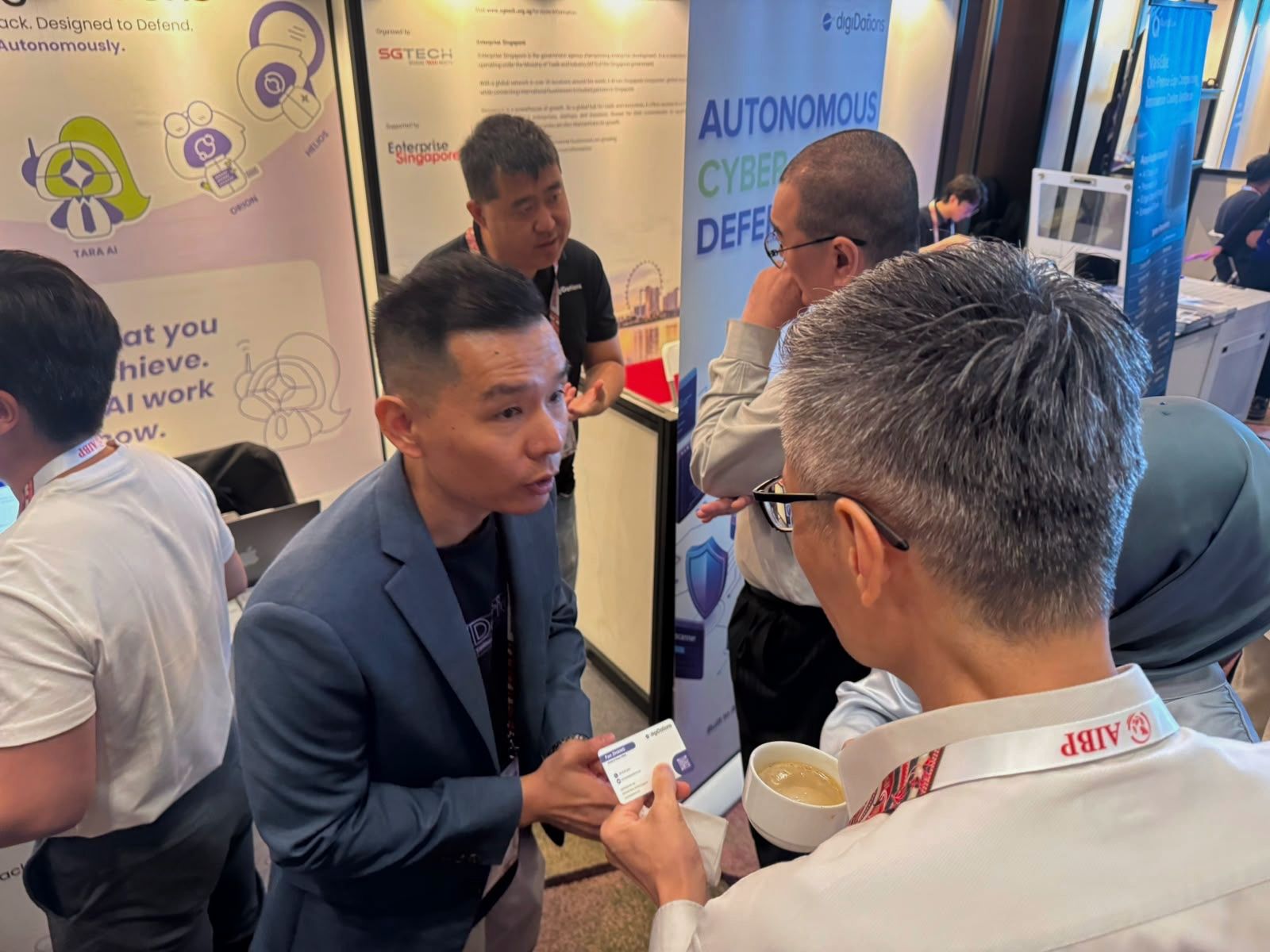
digiDations, a cybersecurity company specializing in continuous, measurable security validation, joined more than 600 enterprise and technology leaders in Kuala Lumpur for AIBP 2026, one of APAC's largest gatherings on the enterprise adoption of artificial intelligence. The team exhibited at Booth S06 across both days of the summit.
Across two days on the floor, the digiDations team brought a specific answer to the question APAC organizations are actually trying to work through right now: not whether to deploy AI in security operations, but whether the AI they deploy can be governed, audited, and defended when something goes wrong.
That answer has a name inside digiDations: Autonomous Cyber Defense. And at AIBP, the team did not describe it. It ran it.

The Question APAC Is Actually Asking
Walking the room, one theme returned at nearly every table. APAC security leaders are not resisting AI in security operations. They are scoping it. The decision to bring AI into the security stack is largely made. The open question is who signs off on what the AI is allowed to decide on its own, and what still needs a human in the loop.
That is a governance question, and in regulated markets it is the one that matters. It is the difference between an AI security tool and a system a board can stand behind when a regulator asks what happened. Autonomous Cyber Defense is digiDations' answer to it: autonomy that stays inside a defined scope, documents every decision, and routes high-risk actions to a human before execution.

Autonomous Cyber Defense, Running Live
digiDations did not bring a slide deck to Kuala Lumpur. It brought TARA AI, the Autonomous CTEM Agent behind Autonomous Cyber Defense, running live on the floor for both days.
The demonstration walked visitors through the loop that defines the platform: ORION surfaces the threat signal, ATLAS validates whether the controls actually hold against it, and TARA AI orchestrates the cycle end to end. Every autonomous action is bounded to that scope. Every decision is traceable to a specific signal and a specific validation result. It is a system security leaders can explain to a regulator or a board. Not a concept, but a working one.
That practical framing resonated with an audience that has grown weary of AI capability claims and is looking instead for AI it can operate responsibly. As the team put it repeatedly across the two days: they would rather show it than tell it.
Accountability as Architecture
The most useful conversations at AIBP were not about how capable the AI was. They were about what happens when it is wrong.
One exchange with a regulated financial-services security leader captured the whole event in a single question: "If TARA AI makes the wrong call, can you show me exactly what it did and why?" For digiDations, that is the governance question, and it has a specific, architectural answer. Because TARA AI's scope is defined and every action is bounded and traceable, accountability is built into the system rather than bolted on after it.
For APAC's regulated enterprises, that distinction is not academic. Frameworks such as MAS TRM and CSA CCoP 2.0 point in the same direction: material decisions must be explainable, and automated actions must leave an audit trail. Bounded, auditable autonomy is how organizations meet that bar in practice.
"The security leaders in this room do not need more AI capability. They need AI they can stand behind when something goes wrong. That is the difference between an AI security tool and Autonomous Cyber Defense." - Tim Nan, digiDations
Looking Ahead
Two days in Kuala Lumpur confirmed a shift the digiDations team has been tracking across APAC: the market has moved past "should we use AI in security" to the far narrower and more important question of who signs off on what the AI is allowed to decide on its own.
To everyone who stopped by, challenged the team, and pushed the conversation forward. Thank you. That exchange is exactly why digiDations shows up in rooms like this one. The company looks forward to continuing the conversation with the security leaders shaping how autonomous defense gets governed across the region.
